Cotton, Linen or Wool: Choosing a Tablecloth for Regular Use
Cotton, linen or wool tablecloths suit different routines. Compare feel, drape and care to choose a cloth that fits your meals and laundry habits.
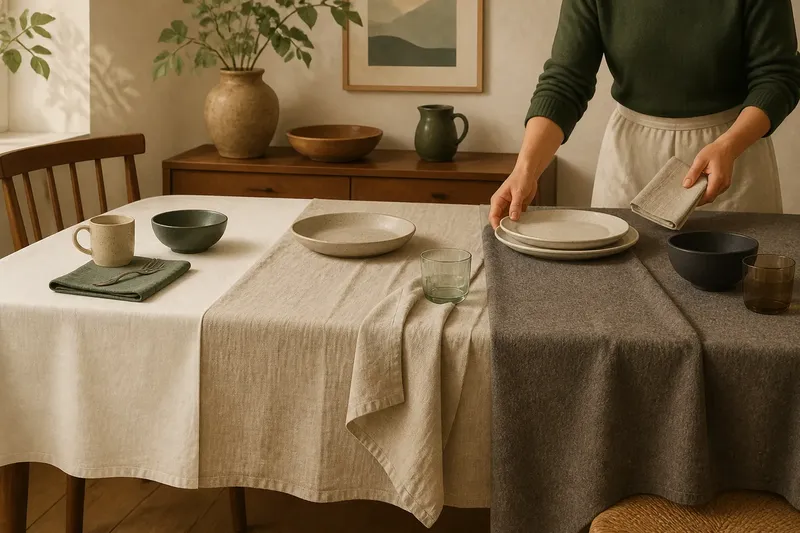
After dinner, a cotton tablecloth can go into the laundry, a linen one may keep soft creases, and a wool cloth may need airing instead. Choosing a cotton, linen or wool tablecloth for regular use means matching its feel, drape and care to the meals you serve.
Start with routine
Think about the table’s daily work. Is it used for quick breakfasts, children’s art projects, long dinners, or a mix? Consider how often spills happen, whether the cloth will be washed after each use, and where it can dry. Those habits affect comfort more than a fiber’s reputation.
Also consider the setting. A cloth used outdoors may collect dust and dampness; one on a dining table may be valued for its drape and hand feel. A cloth that is easy to remove and store is more likely to suit a busy household than one that demands careful handling each time.
Cotton for washing
Cotton is often a practical choice for a table used every day. It feels familiar and usually has enough body to lie flat without looking formal. Depending on the weave, it can feel crisp, smooth, or softly textured. A plain cotton cloth pairs easily with everyday dishes.
Many cotton tablecloths can be machine washed, but the care label matters. Finishes, colors, blends, and trims can change what is appropriate. Cotton can wrinkle, and some cloths may shrink or lose color if cared for against their instructions. A relaxed household may smooth the cloth by hand after drying; someone who prefers a crisp surface may need to iron it.
Choose cotton if the table sees regular meals, the cloth will be washed often, and familiar laundry care fits your routine. It suits households that want an unfussy surface rather than a cloth kept mainly for special occasions.
Linen for drape
Linen has a slightly textured feel and tends to fall softly over the table edge. Its natural creases are part of its look. That can make a meal feel composed without a stiff, pressed finish, while the weave adds visual interest to a simple setting.
Care depends on the particular cloth. Linen can wrinkle readily, and a crisp appearance may call for pressing while the fabric is slightly damp. Some pieces are designed for machine washing; others have trims or finishes that call for gentler care. Check the label and consider whether you have space to dry it without leaving it crumpled in a basket.
Linen suits people who like a relaxed drape and do not mind visible creases. It can work for regular dinners when a lived-in surface feels welcome, but may be less suitable if the table must look sharply pressed with little effort.
Wool for warmth
Wool brings a warm hand and a fuller, more substantial drape. It can make a table feel softer, especially in a cool room or during an unhurried meal. Its texture can give a plain setting depth without a printed pattern.
Wool is usually the least casual of these three choices for routine laundering. Depending on its construction, it may need airing, spot attention, or professional cleaning rather than a standard wash. It can also be less convenient around wet spills or food that needs prompt removal. A wool covering may work better as a topper or for meals with a predictable, careful routine than as the only cloth on a busy kitchen table.
Consider wool if warmth and a substantial feel matter more than easy washing, and if its care needs fit your household. It is not automatically delicate, but check the care instructions before choosing it.
Compare the fibers
- Check the care label: If it allows machine washing that fits your laundry routine, consider the cloth for frequent use; if it calls for gentler care, choose a setting where that effort is manageable or compare another cloth.
- Check how you feel about creases: If relaxed folds suit your table, consider linen; if you prefer a smoother look, choose a cloth whose weave and care instructions support it, such as a suitable cotton.
- Check how the cloth drapes: If you want a soft fall over the edge, consider linen; if you prefer more body, compare cotton or a fuller wool cloth and choose the one that sits as you like.
- Check the likely mess: If meals often involve spills, favor a cloth with care instructions you can follow promptly; if meals are calmer, wool may be practical when its cleaning needs fit.
- Check the room and season: If the table feels cold and you want a warmer surface, consider wool; if warmth is not needed, choose cotton or linen according to care and drape.
- Check the cloth’s construction: If it has a coating, lining, trim, or fiber blend, follow its specific instructions; if those instructions do not fit your routine, choose a simpler cloth.
Which cloth fits your table?
Which fiber is easiest to wash?
Cotton is often the most straightforward for routine laundry, but the care label determines the suitable method. Linen may also be washable, while wool more often calls for a gentler care plan.
Which fabric hides creases best?
There is no single answer across all weaves. Linen’s creases are usually part of its appearance, while the texture of some wool cloths can make folds less prominent; inspect the particular cloth and decide whether its surface looks right to you.
Is linen too delicate for daily meals?
Not necessarily. The weave and construction matter, as does the amount of care you want to give it. Choose linen for daily use if its texture, creasing, and laundering instructions suit your routine.
Can wool cover a dining table every day?
It can if the table’s use and the cloth’s care requirements are compatible. For frequent messy meals, a washable cloth may be easier; wool can instead serve as a topper or be used for calmer settings.
A routine in practice
Say you use a kitchen table for breakfast and evening meals, and you own a cotton cloth whose label allows machine washing. You want to avoid pressing, but do not mind a casual look. First, compare the label with the laundry routine you already follow; because they fit, keep cotton in consideration. Next, decide whether its wrinkles are acceptable; if they are, smooth the cloth by hand after drying. Then consider a linen cloth: its soft drape may appeal, but if its care instructions require more attention than you want to give, set it aside. Finally, compare wool’s warmer feel with its gentler care needs; if spills are common and that care is inconvenient, use wool only as an occasional topper. The resulting choice is the cotton cloth for everyday meals, with the understanding that a relaxed finish matters more than a pressed surface.
Choose by use
For regular meals and familiar laundry, cotton is a natural starting point. For a soft fall and visible creases, consider linen. For warmth and a substantial feel, wool can suit calmer settings where its care needs are manageable. The right cotton, linen or wool tablecloth is the one whose appearance and care fit your actual routine.
Before buying, handle the fabric if possible and check how its edge falls over a table corner. Notice whether the cloth feels too stiff, too light, or comfortable for the way you use the table. That quick comparison can help you choose a covering you will reach for often.