The Jar Reuse Myth: A Container Is Not Automatically the Right One
Jar reuse works best when shape, closure, cleanliness, and contents match. Learn how to choose a jar that stores items safely and stays easy to use.
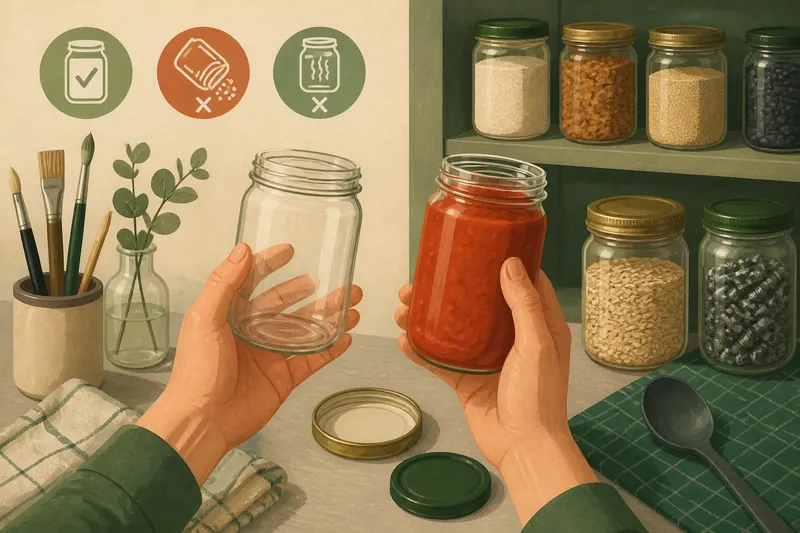
You have a clean jam jar in one hand and leftover sauce in the other. Jar reuse can work, but the jar’s shape, closure, cleanliness, and former contents all affect whether it suits the job.
Start with what you will store and how you will reach it. A wide opening may suit thick sauce or oats, while a narrow neck may help contain small pieces but make scooping awkward. Then check whether the jar can be cleaned, closed, and stored where you plan to put it.
Match Contents and Shape
Think about the tool or hand that must reach inside. A measuring cup needs a wider opening than a funnel. A spoon should pass through the mouth and turn near the base if you plan to scoop thick food.
Straight sides often make it easier to scrape out contents and wash the interior. A narrowed shoulder can trap sticky food below the neck. For small craft supplies or hardware, a narrow opening may reduce spills, provided each piece can pass through without getting stuck.
Consider the destination, too. A stable base helps on a refrigerator shelf or desk. A heavy glass jar may be inconvenient in a lunch bag, and an ordinary screw-top lid may not prevent leaks if the jar tips. For transport or spill-prone contents, choose a container designed for that use.
Inspect the Closure
Set the lid on the rim and turn it gently. It should sit evenly rather than rock, cross-thread, or leave an obvious gap. Look inside for rust, dents, residue, or a damaged sealing layer.
A lid that screws on is not automatically leakproof. For dry pantry goods, choose a clean jar that closes well enough to keep out ordinary dust and pests. For refrigerated leftovers, use a food-storage container and follow the food’s storage guidance. Do not use an ordinary reused jar or lid for shelf-stable canning; use equipment intended for the preservation method and follow current, recognized instructions.
Check Cleanliness and History
Wash the jar and lid with dish soap and warm water. Inspect the threads, corners, and underside of the lid for residue. Let both dry fully before storing dry goods.
Do not use a jar for food or drink if it has a chip or crack, especially at the rim. A persistent odor or oily film can also make it a poor fit for food. If you do not know what the jar held, reserve it for a suitable nonfood use or follow local guidance for recycling it.
Say you have a clean jam jar with an intact rim and a lid that fits evenly. You want to refrigerate thick tomato sauce for ordinary short-term use. Check that a spoon passes through the opening, wash and dry the jar, then inspect the lid and threads. If the lid closes evenly and the jar fits upright on the shelf, it may suit that use; if it rocks or retains residue, choose a food-storage container instead. This does not make the jar suitable for canning.
Choose a Jar Reuse Fit?
Can I reuse a jar for pantry food?
Use it if it was intended for food, is clean and intact, and closes well for the contents. Match the opening to your scoop or pouring method, and label anything that is not obvious.
Can a reused jar hold leftovers?
It may suit upright refrigerator storage if it is clean, undamaged, and closes appropriately. For carrying food or preventing leaks, choose a container designed for transport and follow the food’s storage guidance.
Can I use an ordinary jar for homemade preserves?
No: ordinary jars and reused lids are not substitutes for equipment specified for a preservation method. Follow current guidance for the food and method, and ask a qualified food-preservation professional or local extension service if you are unsure.
What can I do with a jar without a lid?
Use it for a stable, open-top purpose, such as holding clean paintbrushes on a work surface. For dusty or spill-prone contents, choose a container with a compatible closure instead.
Redirect a Mismatch
A jar that does not suit food storage may still work as a desk caddy, a holder for clean paintbrushes, or a vase for a small bunch of stems. Match the new role to the jar’s condition. A chipped mouth is unsuitable for a use that puts fingers near the edge, and a stubborn odor rules it out for food and odor-sensitive materials.
For hardware, label the jar and place it where it will not fall. For craft supplies, choose an opening that lets you see and retrieve pieces easily. If no useful role fits the jar’s shape or condition, use local glass-recycling guidance rather than keeping it for a job it cannot do well.